Jason Huls unfolds a vast ‘Mythos’
~~~~~
“Mythos Improbable, but Doable:
A Conversation with Jason Huls of Ten Wing Media”
by Jason Pankoke
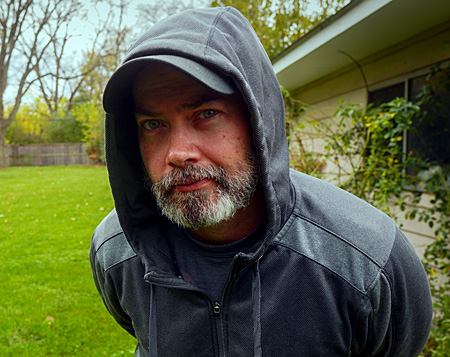
A leaf. A whisper. A dark shadow. A sudden sensation that is not what you’re expecting. An unnameable force that sweeps you into something innately larger than you’ll possibly be prepared for. These and any number of details could be the signal that you, the character of a story or the reader or watcher of said story, are about to be drawn into a mad cacophony that can only be the product of a storyteller who doesn’t hesitate to draw fear and inspire awe from the fantastic. This is the arena in which plays Jason Huls, a lifelong practitioner of the dark media arts. Raised in Bloomington-Normal and studied at Illinois State University in the hyphenate college towns a short car trip away from us in Champaign-Urbana, he lives in the far west Chicago suburbs with his wife Erin and three children and, when not applying his skills in the workplace, is building a portfolio of cosmic ramifications to threaten us all with a good time.
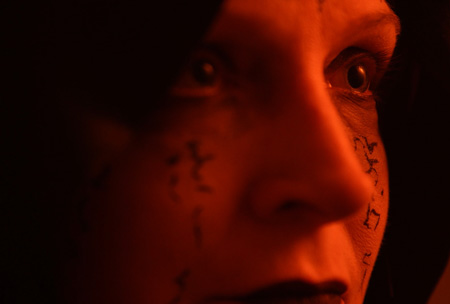
Having been a welcome topic of discussion here at C-U Blogfidential since our earliest days on the internet in parallel with his earliest projects of scope, Huls has dreamed big with not-so-vast resources at hand. His short stories have been published in anthologies and literary magazines during the last several years and he’s produced a handful of films independently in the two decades since graduating from ISU and relocating north to attend DePaul University, where he honed his producing and visual effects talents. The films have included the horror comedy LATE AFTERNOON OF THE LIVING DEAD (2007), the future thriller CITIZEN IN THE TEMPLE (2015), the shadowy drama BEYOND THE BASEMENT DOOR (2012), and the loosely connected shorts, THAT DAMNED YELLOW RAINCOAT (2023) and THE FAWN (2025), which will feed into a larger expanse of tales and platforms that he is concocting as we speak. He also will pitch in elsewhere, often in concert with his long-time friends Paul G. Lyzun and Paul A. Brooks, which has included behind-the-scenes roles on the latter’s backwoods horror opus, HUNTING FOR THE HAG.
Huls was kind enough to talk with CUBlog about his life as a driven tale-spinner of all things creepy and ephemeral, updating us about his active slate that includes a collection of short stories and a new feature-length film that both will stem directly from what he explored in the recent shorts. We also discuss his general process for organizing and completing his screen stories on his own time and with a low budget as well as his regimen for generating ideas and consistently putting words to processor for his writing. Finally, we turn a bit candid about the relationship between his creative output and his family, who pitch in regularly in big ways and small. A good dynamic is swirling in the world (and worlds) of Jason Huls, and our fellow creatives and dearest readers would be wise to follow along. As always, read on, MacDuff…
~~~~~
~~~~~
C-U Blogfidential: Jason, thanks again for visiting with us. We hope the unfolding fall season has been to the liking of you and your family. Are you prepared to get spooky for Halloween in your neck of the Chicago suburbs, or maybe soak up some harvest time out in the wilds of Illinois?
Jason Huls: Yes sir! I try to get off the asphalt and into the wilds as often as possible. I’ve been itching to shoot some fall footage, but I haven’t figured out what I’d do with it yet. Maybe I’ll shoot first and ask questions later. My wife and I are trying to get our kids out for all the activities before the weather turns cold. Pumpkin carving and costumes are right around the corner.
CUBlog: Given your long-standing interest in the macabre and otherworldly in your storytelling endeavors as a media producer, filmmaker, and author, we’d imagine this is a segment of the calendar year that holds a special place for you, and that you happily draw from it year-round. What is the appeal to you, and which are the key qualities that you like to carry over into the tales you tell?
JH: In the horror author’s mind, it is always October. I don’t know if that’s true, but it’s a good line. There is a rich atmosphere during fall in the Midwest. I think it’s the season change, life in transition, and how our culture accepts and celebrates the darker things around Halloween. To me, it’s vivid. I try to infuse my work with a similar solemn and mysterious energy. It helps that my neighborhood looks straight out of Haddonfield…
I will confess, though. Summer is my favorite season, and I’m not a cold weather person at all.
~~~~~
~~~~~
CUBlog: You provide a peek behind the curtain at what you’re working on at the Jason Huls Creative page on Substack. Often, you like to suggest other creators, online portals, and film and book releases that you have been enjoying. Is there anything new and notable sitting on your nightstand, bookmarked in your browser, or flickering on your television right now that you are checking out and, maybe, we should too?
JH: If I’m being honest, on my nightstand right now there is a half-eaten donut that one of my kids left behind…
I finished reading Bone White by Ronald Malfi a couple months ago and it has stuck with me. A serial killer leads police to a mass grave in a small Alaskan town, and a man travels there to discover what happened to his lost twin. It has TRUE DETECTIVE vibes with a smidge more of the supernatural. I couldn’t put it down.
I’d like to pick up another Malfi book or one of Brian Evenson’s novels. I’ve read both his short story collections, Song for the Unraveling of the World and Good Night, Sleep Tight, and loved them both. Another book I need to pick up is P.L. McMillan’s cosmic horror collection, What Remains When the Stars Burn Out.
It would be interview malpractice if I didn’t recommend the two books I’ve been a part of most recently. Hibernator: Stories for the Long Sleep from Braced Books is a winter-themed horror collection, packed with talented authors. That Old House: The Kitchen is kitchen-themed horror stories from Voices From the Mausoleum. The editors on both books did a fantastic job. Well worth a couple bones.
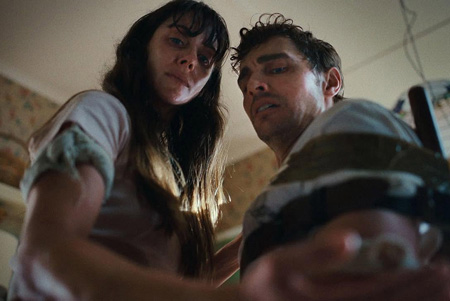
I made an October movie playlist to keep me in spooky mode. Most recently, I rewatched one of my all-time favorites, IN THE MOUTH OF MADNESS. I’m a John Carpenter guy. I also really enjoyed TOGETHER with Alison Brie and Dave Franco. It’s a small cast, few locations, and just the right amount of lore. Really well done. My wife and I just finished CARRIE [the mini-series]. Mike Flanagan doesn’t miss. It was so well done and I hope he gets to shoot all three seasons he wants to produce.
What’s on deck? The Japanese horror film, KURONEKO, about vengeful ghosts who seduce and kill samurai. I bought the Criterion Blu-ray so it better be good! I also want to see HOKUM. I missed it in theaters and don’t know anything about it, so, no spoilers in the comments, please!
~~~~~
~~~~~
CUBlog: Very interesting selections, thanks for sharing!
Back to your own endeavors, the Substack also opens a window for your followers to see what goes into the making of your movies. The more recent screen work under Ten Wing Media, the domestic demon short THAT DAMNED YELLOW RAINCOAT and prairie folk horror short THE FAWN, was produced by you and long-time friends and collaborators after a hiatus of several years. It was necessitated, as you’ve shared with us in the past, by the constraints of the pandemic as well as you and your wife Erin raising three young children.
How well overall did the production of FAWN and RAINCOAT go? Did the experiences “shake off enough rust” that you’re raring to get back on the set soon?
JH: I am absolutely raring to get back on set, and I do have a film in the works. That project, which must remain nameless, blends many of the themes from THE FAWN and THAT DAMNED YELLOW RAINCOAT. If everything goes according to plan, we could be shooting by the spring of 2027.
Production for both of the short films went smoothly. The first step was to surround myself with good people. I spent years building a contact network I trust. The technical people are extremely skilled and the actors are not only talented, but well-prepared. I want to emphasize how crucial it is to get the casting right.
I’ve been making movies for more than twenty years now, so I’m comfortable with my pre-production processes. Up to this point, those processes have led to positive experiences on set and efficient use of time. I have my shot lists and stick figure storyboards. No one will catch me unprepared! I handled the editing and visual effects for FAWN and RAINCOAT myself so that lengthened the schedule, but I wasn’t under any pressure.
I’m also about sixty percent done writing a collection of short stories called Victims of the Cold Sun. Ten horror stories build my own cosmic horror mythology, and give the reader different perspectives on an evil plot unfolding across centuries. The movie that shall not yet be named is set within that world as well, so it’s my hope that both projects will support one another. One hand washes the other sort of thing. It would also be cool to film a few of the short stories to go with the book. We’ll see!
CUBlog: Unlike many indie producers who wade in the fantastic, you have no problem in picking your spots and designing vibrant visuals on a budget to put the cosmic in your cinema. You’ve shown a propensity for this, going all the way back to earlier short films like BEYOND THE BASEMENT DOOR, with our man Steve Christopher fighting Lovecraftian horrors, and grad student projects like CITIZEN IN THE TEMPLE, completely imagined in an intergalactic future.
Beyond the organizational steps of making a movie, how do you approach both the visual look of the special effects and the choices of accomplishing them through practical, optical, or CGI means?
JH: I take a standard production design approach and create a tear sheet. It’s like a mood board with links and stills that evoke the feeling I’m trying to achieve. I prefer to do things practically if possible, but I’m not opposed to using visual effects if the budget allows and it fits the need.
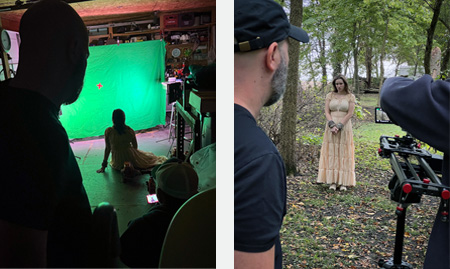
Lately, budget hasn’t been a concern because I’ve been handling all the VFX myself. On THAT DAMNED YELLOW RAINCOAT, the creature we see is a Halloween mask with VFX alterations. I’m always thinking about how I can twist a simple mask into something sinister.
~~~~~
~~~~~
CUBlog: “Sinister” is an operative term, given the qualities of your screen storytelling. We’ve covered the newer of the two shorts, THE FAWN, in broad strokes here on our site. It was filmed primarily on a rural homestead and property in the country outside of downstate Pontiac as well as a basement studio to afford control over some of the effects and B-roll shots.
On Substack, you describe how the film plays as the equivalent of a “nightmare” that is not beholden to typical narrative rules, and that you formulated what happens in the film based on locations and resources available to you. How successful of an experiment was THE FAWN and, in the material behind-the-scenes sense, would the effort be applauded by the late, great Roger Corman, whom you cite in your online notes about how you put the film together?
JH: I think Roger would have enjoyed it! THE FAWN was made for no money, using only what was available. Those were two of his secret ingredients. There was no nudity or exploding motorcycles though, so, who knows?
The project came about because I was asked to shoot Blu-ray menu screens for Paul A. Brooks’ HUNTING FOR THE HAG. We had access to the same woods [as seen in HAG] and the trailer, so, why not take a little extra time and shoot an experimental film? A good idea in theory, but due to logistics, we got the menu screen footage but didn’t end up shooting [FAWN] until almost a year later. Funny how movies work.
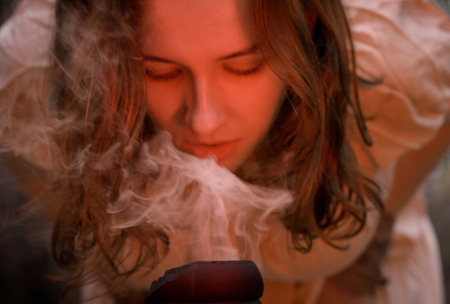
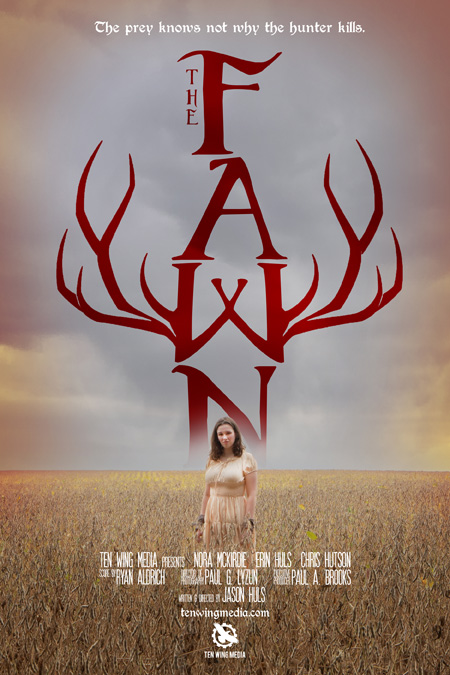
I wrote the script with only one character in the woods [played by] actress Nora McKirdie. We brought our long-time director of photography, Paul G. Lyzun. He lives in Indiana now, so the film was a good excuse for a reunion. The witchy half of THE FAWN wasn’t written until after we’d shot in the woods.
The project evolved in editing, which I one thousand percent do not recommend, but this was a unique case where I knew what was going to happen from the beginning. The witch was played by Erin. Her scenes, many of the pick-ups, and the miniature work were shot in my basement and backyard.
THE FAWN was an experiment in how to string together story beats using only imagery, with the intent to inspire wonder and prompt the audience to ask questions. Was it successful? I think it was, based on the screenings I’ve had and the people I’ve talked to. Unless they were lying. Do you think they were lying?
CUBlog: Let the record show we do not think they were lying. [Laughs]
We’ve also touched upon THAT DAMNED YELLOW RAINCOAT. It was more elaborate in terms of your aims to flesh out its central premise, where the hinge of a failing marriage breaks apart just as the dark arts take hold in a pact with one of the spouses, in multiple formats. How well did the multi-pronged approach of both the creation and self-promotion of RAINCOAT play out, in your opinion?
JH: Historically speaking, I’ve not been great at sharing my creative process, so the story and the film allowed me ample time and opportunity to get better doing that. I’m much more comfortable showing how the sausage is made now than I have been in the past.
As an artist, the whole endeavor was a success because it allowed me to tell the story in two different mediums, which was more satisfying creatively. The story and the film helped to flesh out the mythology that is the bedrock for the projects I’m working on now. Functionally, I learned that, going forward, I would prefer to write the fiction before the screenplay. I think the fiction version would be useful for actors.
The story was published in a magazine, which helped build my resumé. The film took me to festivals and conventions, where I met a lot of cool people. It won the Hubbie Award at Joe Bob Briggs’ World Drive-in Movie Festival and Joe Bob himself introduced the movie to audiences. THAT DAMNED YELLOW RAINCOAT was [also] picked up by Screambox for their BLOODY BITES show. Those experiences mean a lot to me, so I would say the approach is a success. I haven’t been able to determine if anyone who read the story watched the movie, or vice versa. It’s hard to track, so I would also say the experiment is ongoing.
CUBlog: Can you tell us how the story came about originally and, a-hem, did she ever return in real life?
JH: The woman in the yellow coat who circled my block over and over a few summers ago [and inspired the premise of RAINCOAT] never returned. Whew!
~~~~~
~~~~~
CUBlog: Before either film premiered online, you made the rounds to have them shown publicly. In addition to the nods from Screambox and Joe Bob Briggs, RAINCOAT received play in several horror-centric events such as Days of the Dead Chicago, where you participated in a panel discussion. THE FAWN earned a handful of slots in genre and Midwest programs that included being shown in central Illinois several times, including a couple of stints at the Normal Theater in Normal that served as a homecoming of sorts as you hail from Bloomington-Normal.
Of the showings that you went to, tell us a bit about what it means to support your own work away from the computer and in public spaces – how do you prepare, who do you bring with you for support, what makes you the most comfortable and productive in these settings, how do you present yourself to strangers?
JH: I enjoy promoting my work away from the computer. I love going to film festivals and conventions because I’m a fan too. I’ll try to offer some nuts and bolts on how I work these things…
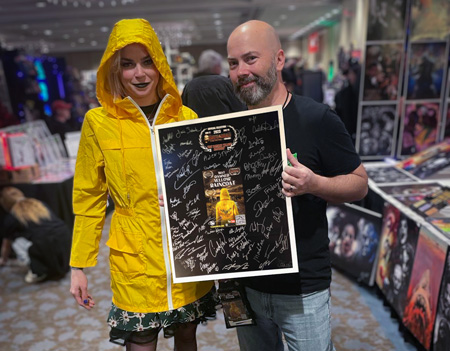
If available, I will secure table space at the convention. Sometimes they’re sold out or too expensive, but if I can make it work, I love having a home base in the middle of traffic. Days of the Dead did it better than anyone. George Lane and Audery Lane ran the film program. They offered table space for filmmakers to mix with the crowd, right along celebrity row. I didn’t have DVDs at that show because I was there promoting an eight-minute short, but others did. I packed free giveaways like pens. Everybody needs a pen. They’re good conversation starters.
Another thing I did was pack a poster-sized foamcore board with my poster printed small, in the middle. I would ask for the autographs of the people I met and those who attended my screening. The board serves a few different purposes. I want to make the audience feel important. I want their autograph because their time is valuable to me. It shows my appreciation for them checking out my work. At the end of the fest, it’s a great keepsake.
I participate in panels and Q&As if they are available. Any chance I can get to talk about my work is valuable, even if there is one person in the audience. At the absolute very least it gives you a chance to polish your song and dance.
I go to other filmmakers’ screenings. I talk to them. That’s the way to build a network.
I like bringing cast members if they’re available. My friend Chris Hutson, co-host of B-Movie Mania and a long-time collaborator, often goes with me. I appreciate the help because lugging all of the fest gear takes effort. My wife, Erin, also goes to the fests with me when we have a babysitter. It’s a fun getaway and she’s been incredibly supportive over the years, from being in the films to cooking for the cast and crew.
How do I present myself before strangers? The same way as any other part of my life, really. I try to conduct myself in a way that would make my family proud. I ask questions. I listen. Given the opportunity, I try to be open and communicate my experience in an authentic way, and help people have a good time. Hopefully I make a few friends.
CUBlog: At present, where can folks enjoy THAT DAMNED YELLOW RAINCOAT and THE FAWN?
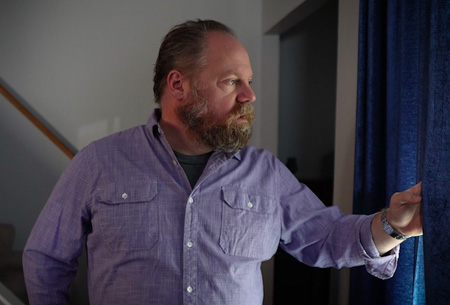
JH: They are both available on YouTube. I would love it if you’d subscribe!
~~~~~
~~~~~
CUBlog: We hope our dearest readers do!
That said, “available for streaming or purchase” seems to be the go-to destination for many independent filmmakers and their work, meaning, on the internet. Whereas FAWN and RAINCOAT were in part intended for communal viewing, other projects related to Ten Wing Media or your fiction writing have been designed to be experienced on a computer or mobile device. These include your review podcast with Erin, Man Woman Movie, your other review show with your friends in weird film that you just mentioned, B-Movie Mania, and The Mythos Minute Podcast, an audio collaboration between yourself and other authors, along with many an observational or comedic viral video.
How have you approached these particular projects (and others that are worth a mention) and do you go into a different creative mindset when it comes to producing for direct-to-video, as it were?
JH: I have to do a lot more vertical video now! It hurts my soul, but I’ve accepted it.
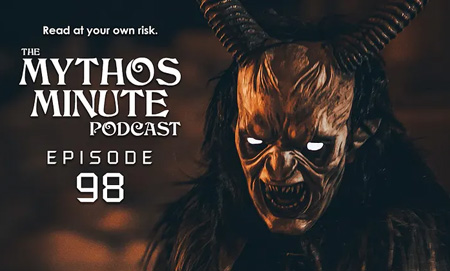
Overall, I try to get the most juice with each squeeze, meaning if there’s a way I can deliver cross-platform by taking a transmedia approach, I will do it. Specifically, with The Mythos Minute Podcast, it started as an audio podcast until I thought it might be more interesting and Rod Serling-ish if I did video versions of me narrating the material for YouTube. It’s hard to get eyes on your projects these days with so many podcasts/books/movies/social media content vying for attention.
CUBlog: Right. Novel approaches and unique spins are “in” when you’re trying to stand out from the crowd.
Unlike the local talent who creates with you on the films and viral videos, Mythos Minute authors live all over the world. As of right now and based on their bios, wordsmiths who you’ve dramatized in the latest episodes of the podcast come from countries like Greece, Poland, the Republic of Georgia, and the United States and have heritage stemming from locations such as South Africa and South Asia. Where do you find the authors that you present and what is it like working long distance with them?
JH: Somehow the authors find me. I put a lot of work into promoting The Mythos Minute across social media, and that has worked well so far. I’ve released 105 episodes and the last batch of thirty have been the most diverse so far. I love learning about the authors, their backgrounds, and where they’re from. It’s amusing that a tiny, one-minute horror podcast could connect me with people around the world. I would love to record a new batch in 2027, if time allows.
~~~~~
~~~~~
CUBlog: Given the angle of the podcast as well as the anthology volumes that you mentioned before, as well as your comments about a preference for “writing the fiction first” when developing a story for the screen, you absolutely value the well-crafted word in your output. Do you consider yourself an author first and foremost in your work?
JH: I try not to think too much about being an author or filmmaker first. When I look at myself, I see both. The roles have changed over time, though.
Ten years ago, I absolutely would have considered myself a filmmaker first. Then I decided to get more serious with my fiction. I appeared in a few anthologies and completed a couple screenplays and now I really do feel a balance. Unless I can figure out how to make the next OBSESSION or BACKROOMS, I would imagine as I get older the writing will take more center stage. That’s just the result of age, money, and logic. Erin is super supportive when it comes to my creative pursuits, and I am forever grateful for the time she gives me.
CUBlog: Is there a daily or weekly regimen that you attempt to follow in order to produce or refine that work, no matter its ultimate use or destination? Famous is Stephen King’s adage about his productive and successful writing process – starting first thing in the morning after getting ready for the day, every day of the week without fail…
JH: I typically work on my projects Monday, Wednesday, and Thursday evenings. If I can fit more time in over a lunch hour, I try to do that too.
The latest addition to my routine is writing first thing in the morning. Literally, the first thing I do when I open my eyes is grab my phone and swipe text into a document for about fifteen minutes. It’s a total freewrite. That practice has helped me a lot mentally. I can sometimes get overwhelmed in the morning. My mind starts making to-do lists and running through all of the things ahead of me for the day. Doing this freewriting exercise gives me something to focus on, almost like a distraction, and after fifteen minutes I’m ready to go.
I’ve also incorporated meditation here and there. I’m interested in the effects that can have, but I wouldn’t call myself experienced or consistent yet. Maybe someday.
~~~~~
~~~~~
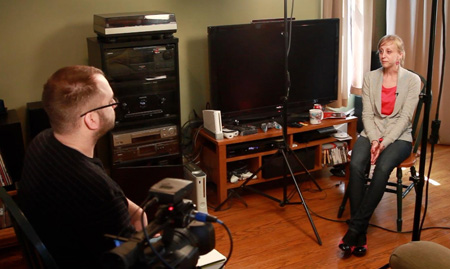
CUBlog: Apart from your love for the darker and more esoteric side of the arts, you will take on projects that are in a different vein. Can you talk to us about your documentary project, WITHOUT CHARITY, and other similar work you may have done? Are there other non-fiction or non-profit initiatives you would like to take on or support in the future as you step back up in your filmmaking career?
JH: WITHOUT CHARITY was an unforgettable experience. It’s a completely different wavelength when you’re interviewing people who have been affected by real-life tragedy, people who will never completely heal, and then those who are responsible for it. I loved working on the project and I hope to be able to do more documentary work someday.
[Paul G. Lyzun directed the documentary and co-produced it with Huls for Ten Wing Media. It covers the history of a triple homicide in north central Indiana in 2000 and the personal aftermath for the community it rocked as well as the life of Charity Payne, then a teenager who was sentenced to more than 100 years for her indirect involvement in what transpired. Her verdict was overturned after spending a few years in prison, yet doubts and controversy are poised to follow her for many years to come. WITHOUT CHARITY was premiered in 2013 and can be viewed on Amazon Prime, while behind-the-scenes coverage and newspaper clippings that summarize what happened are still live on Facebook. ~ ed.]
Honestly, it’s all about finding the right subject. I don’t have any preconceived ideas about what that might be. It doesn’t have to be true crime. I think it would be a blast to work on some quirky short subject documentaries but, with a book and feature in the pipeline, I haven’t had the time to turn over any rocks. If anyone has any ideas, drop them in the comments!
I’ve done work for non-profits, too. A few years ago, I put together a series of videos for the TBRS community. TBRS stands for Tatton-Brown-Rahman Syndrome. It’s a rare genetic disorder and only about 450 people in the world have been formally diagnosed. It’s suspected that there are a lot more cases that haven’t been diagnosed. Due to its rarity, the community has to work extra hard for visibility and funding for research. I interviewed several families and helped put together some outreach materials. I would like to work more with that population and other charitable causes where I feel like my skills can contribute to the betterment of humanity.
CUBlog: Keeping that in mind, do you have any overarching goals as far as where you would like to be in your life and creative journey in the next five, ten, twenty years? Would you rather just enjoy and get the most out of what you’re doing in the here and now with the future being unwritten, as it were?
JH: I think the sanest approach would be to make the most out of the here and now. I try to stay Zen about everything, but sure – there is a lot I hope to accomplish. No one ever accused me of not having ambition. I’ve never talked about this but, to quantify it, if I could do three features and ten books, I would be happy. That’s a lot, and it will probably take me to retirement, if ever, but that would be a good body of work.
~~~~~
~~~~~
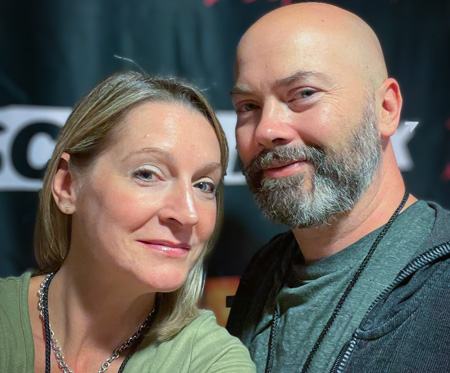
CUBlog: How do Erin and your children process what it is that Dad likes to spend his time on, pursuing his dreams as a multimedia creator? Erin has certainly been a tremendous help to what you do, as you’ve stated, but do you see any spark in the kids that tells you they may pursue the arts as they get older? What might they do instead to make Mom and Dad proud?
JH: My kids aren’t all that interested in my projects (yet? Ha!). They are happy that I’m happy, but they haven’t seen or read most of it. They’re too young.
They do enjoy making YouTube videos with Mom and Dad, and if they have any ideas we try to indulge them. My oldest is very into technology, so he enjoys the camera gear and making tech breakdown videos. My two youngest like to unbox their toys. We briefly, very briefly, considered trying to do the whole “YouTube family” thing but, to be successful, it’s such a grind and Erin and I don’t want to do that to them. I would probably also get burnt out editing all that. So, we keep it fun and relaxed. I do find it interesting though that [being a] YouTuber is the new rock star.
It’s possible the kids could end up in the arts. We encourage them to explore all of it. They are each artistically inclined in different ways. My youngest enjoys reading and writing the most. He’s written stories and wants to make books. I will be proud no matter what they choose. I just ask that if they try something, they do their best.
CUBlog: Watching our youth and young people get excited about what they can do with all the tools at their disposal, starting with their gumption and imagination, is always an awesome thing to behold.
That leads us to the inevitable. We’ve basically known each other for the entire life of C-U Blogfidential. One of our earliest posts was about the premiere of your first feature film, LATE AFTERNOON OF THE LIVING DEAD, at the Castle Theatre in downtown Bloomington. In the ensuing twenty years, you’ve grown in your talents and matured in your output, but also you’ve clearly looked back at LATE AFTERNOON with love and that has included a re-edit and digital glow-up in recent times. What are your overall thoughts about your film life so far and the zombie melee that kicked it into gear?
JH: I feel like I’ve come a long way in my filmmaking journey, but I have a lot further to go.
LATE AFTERNOON OF THE LIVING DEAD was incredibly stressful at the time, but I look back on it with nothing but love. It’s still crazy to think we actually finished it. There were over 100 people involved [including a] large main cast, one of whom (me) was a ghost the entire time [and it] required VFX we barely knew how to do. We shot in several different cities [such as Decatur, Bloomington-Normal, and Chicago]. The script began as a short film until we put so much work in that we collectively decided to expand it into a feature. I was writing during production. We shot a mockumentary of our own movie alongside the regular scenes. It probably shouldn’t have worked but it did.
I had an amazing time working with my friends and family [and] just about everybody I knew. When the film was complete, I used it as a demo reel to land the job I’ve had for the last twenty years. There have been so many cool moments because of LATE AFTERNOON. To this day, I’ve never had more fun on a project.
CUBlog: Finally, what do you consider your “bread and butter” work as a media professional? How can folks contact you about your services?
JH: I consider writing and directing to be my major strengths, and I’ve been a producer for twenty years at my daytime nine-to-five job. I like brainstorming and shaping content. It’s easy to get me excited about ideas. If anyone would like to contact me about their ideas, feel free to e-mail at contact [at] tenwingmedia [dot] com. [Also] I post my project updates, essays, and thoughts on creativity on my Substack. Come along for the ride!
~~~~~
~~~~~
Interview conducted October 19-November 11, 2026, via e-mail.
It has been slightly edited and reformatted for reading ease.
Figure captions and credits will pop up when you hover over images.
CUBlog Interview © 2026 Jason Pankoke
All photos: courtesy Jason Hulls/Ten Wing Media,
except for TOGETHER still © Neon